
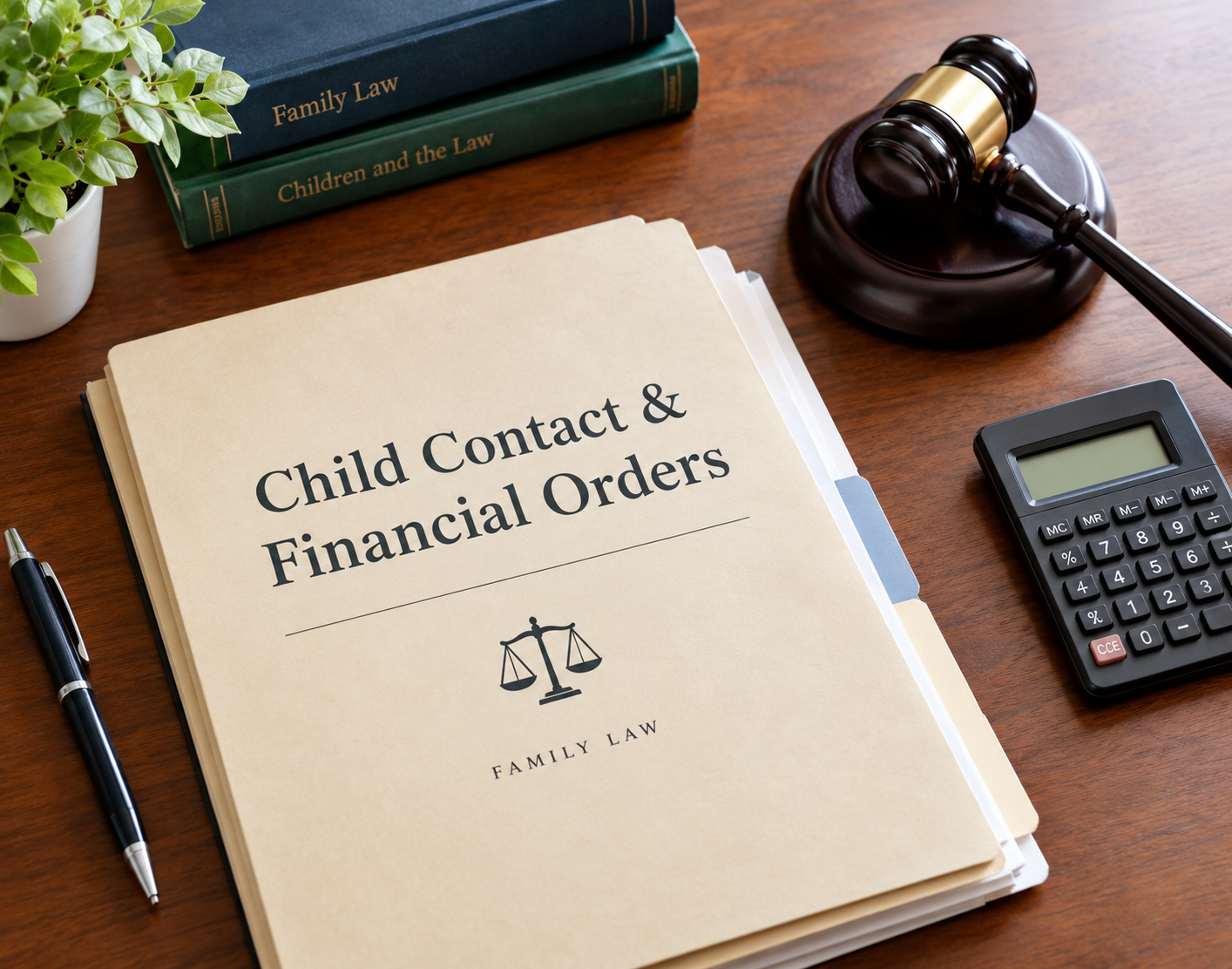
Financial worries often add considerable stress to an already difficult time for separated families. Consequently, many parents ask, “Can Family Court force a parent to pay for child contact session costs?” The short answer is that it depends on the individual circumstances. At Prime Time Charity Services, we offer Support to families who use supervised child contact services, and we hear this question regularly. This blog explains how costs usually work, who normally pays, and what you can do if you disagree.
Can the Family Court Order a Parent to Pay for Child Contact Sessions?
A child arrangements order sets out where a child lives and how much time the child spends with each parent. However, it does not usually decide who pays for a contact centre. Therefore, a court can order supervised contact without ordering either parent to pay the fees. In other words, payment is a separate legal issue.
So, can family court order a parent to pay for child contact? In some cases, the court can address costs. However, the outcome depends on the particular circumstances and the legal powers that apply. Furthermore, a judge examines the facts of each case, and the court may encourage parents to agree on fees rather than impose a solution. Because every case differs, parents should seek professional legal advice about their own position.
Who Usually Pays for Supervised Child Contact?
Who pays for supervised child contact? However, no single rule applies. Families usually follow one of these routes:
- One parent pays the full cost. Typically, the parent who requests the sessions covers the fee.
- Both parents share the fees. Some parents split the cost equally, while others split it in proportion to their income.
- Parents agree on a payment arrangement. For example, they may pay in instalments.
- Funding or financial assistance covers some of the cost. Where assistance exists, it can considerably ease the financial pressure on both parents.
Prime Time Charity Services will explain our fees and talk through your options. In addition, we encourage you to ask any contact centre about the financial help it offers.
What Factors Can Affect Who Pays for Contact Centre Fees?
Child contact centre costs and court orders both play an important part. Moreover, several other factors matter too:
- Each parent’s financial circumstances. Income, savings and regular outgoings all count significantly.
- The reason supervised contact is necessary. This reason may shape what parents consider fair.
- Any existing court orders or agreements. Indeed, a written agreement may already say who pays.
- The contact centre’s fees and payment policies. Each service sets its own policies, so fees and payment terms vary.
- Whether financial assistance is available. Likewise, help can reduce the amount parents must find.
As a result, two families in similar situations may reach very different outcomes. For this reason, personal advice matters.
What Happens If a Parent Refuses to Pay for Supervised Contact?
First, remember that a disagreement over fees does not automatically change an existing child arrangements order. The order stays in place until a court changes it. Therefore, please do not stop contact on your own. Instead, consider these practical steps:
- Talk to the contact centre. Often, staff can explain payment options and may suggest a plan.
- Review any existing agreement. Therefore, check carefully what you both agreed in writing.
- Seek legal advice. Additionally, a solicitor can explain your options and the court’s powers.
- Consider mediation if it is appropriate and safe. Consequently, a neutral professional can help you reach a fair and workable solution.
Above all, keep your child’s needs at the centre. Ultimately, children benefit when adults settle financial disputes calmly and cooperatively.
Can Family Mediation Help Resolve Disagreements About Contact Costs?
Often, yes. An accredited family mediator helps parents talk through the issue with a neutral person. In particular, mediation can help you discuss:
- How you will divide contact centre fees.
- Whether the payment arrangement is affordable.
- How often supervised sessions will take place.
- Alternative arrangements that meet your child’s needs.
- How you will review the agreement if circumstances change.
Mediation does not suit every situation, especially where safety concerns exist. Nevertheless, it gives many parents a calmer and more constructive route than court proceedings.
Do you need Support with supervised child contact services? Prime Time Charity Services is here to help. Please call us on 0300 365 2700 or email referral@ptccc.org.uk to discuss a referral. Our friendly team will listen carefully, explain your options and guide you through the next steps. Together, we can help your family move forward.
Frequently Asked Questions
Sometimes the court can address costs, but it depends on the circumstances and the legal powers that apply. However, a child arrangements order usually sets out contact arrangements, not who pays the fees. Therefore, a solicitor can advise you on your own case.
Families handle fees in different ways. For example, one parent may pay in full, both parents may share the cost, or they may agree on a payment plan. Additionally, financial assistance may help where it is available.
Some families can access funding or financial assistance. Therefore, ask the contact centre what help it offers, and explain your circumstances honestly.
No. A disagreement over fees does not automatically change an existing child arrangements order. Instead, the order stays in place until a court decides otherwise.
No, please speak to the contact centre and take legal advice first. Otherwise, stopping contact without agreement can cause significant problems for you and your child.
Yes, it often helps. In particular, a mediator helps you discuss how to share fees, whether payments are affordable and how to review the plan later. However, mediation does not suit every case, so safety always comes first.
Simply call us on 0300 365 2700 or email referral@ptccc.org.uk. Afterwards, our team will explain the next steps.
Related Posts


Contact Us
Prime Time Child Contact Centres
Norwood Picture House Library,
1-7 Norwood High St, Norwood,
London SE27 9JU,
Friends Meeting House,
Redlands Way,
London, SW2 3LU
0300 365 2700
referral@ptccc.org.uk


“Keeping children in touch with parents following separation”
