
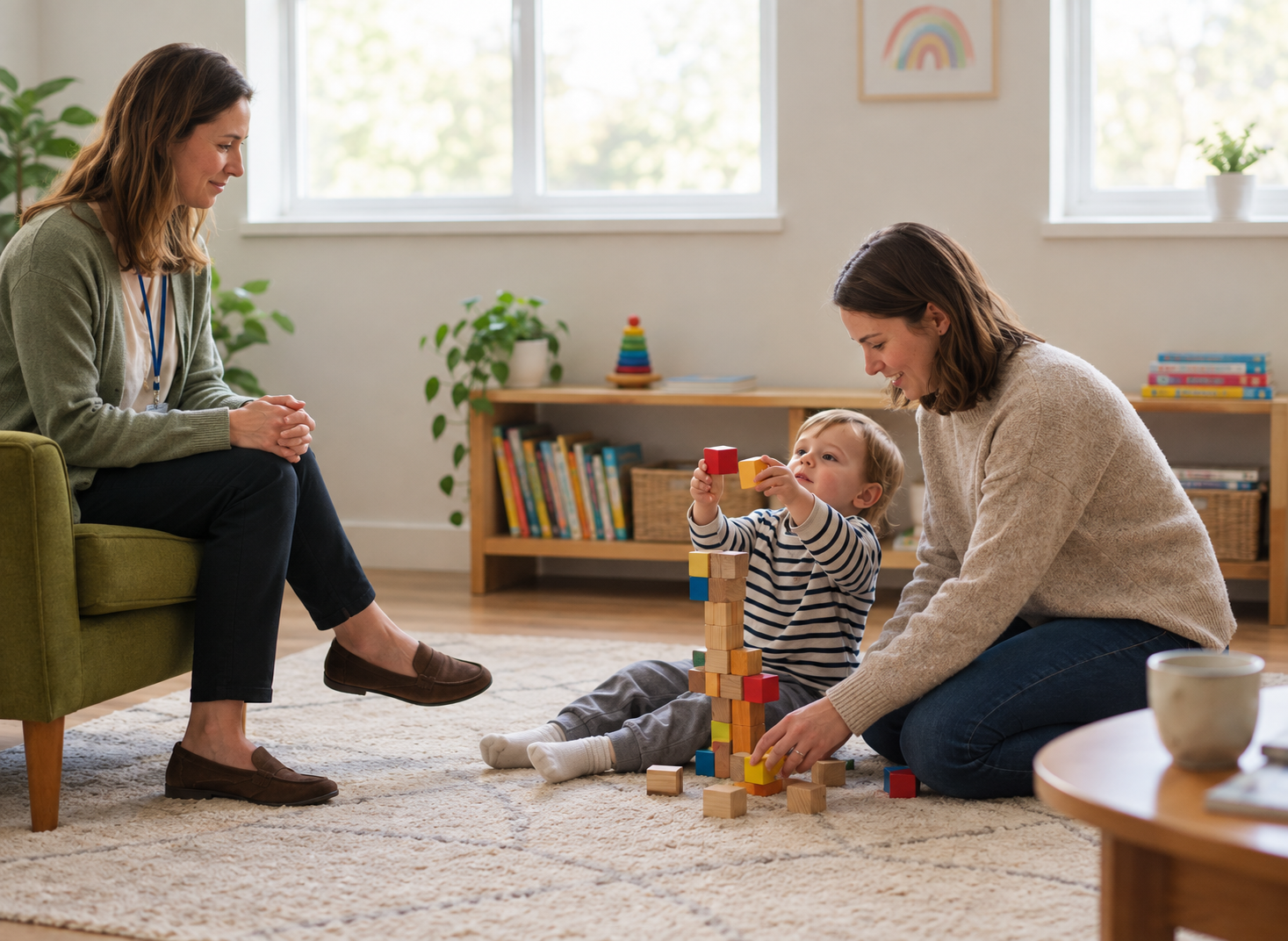
At Prime Time Charity, we know that supervised child contact means far more than watching a room. Every session gives a child the chance to build family relationships safely, and our team works quietly behind the scenes to make that happen. This article explains the contact supervisor role and answers a question many families ask us: what does a contact supervisor do?
What does a contact supervisor actually do?
So, what does a contact supervisor do, exactly? The contact supervisor role goes well beyond sitting in a corner and observing. Instead, supervisors create a calm, safe and welcoming space where family time can happen naturally. They set up the room, greet everyone warmly, and stay alert throughout the session. Meanwhile, they also support positive interactions between the child and their family member, and they step in gently when needed. As a result, families receive both structure and support during a sensitive time. In short, the contact supervisor role blends warmth with careful attention.
Helping children feel comfortable during contact
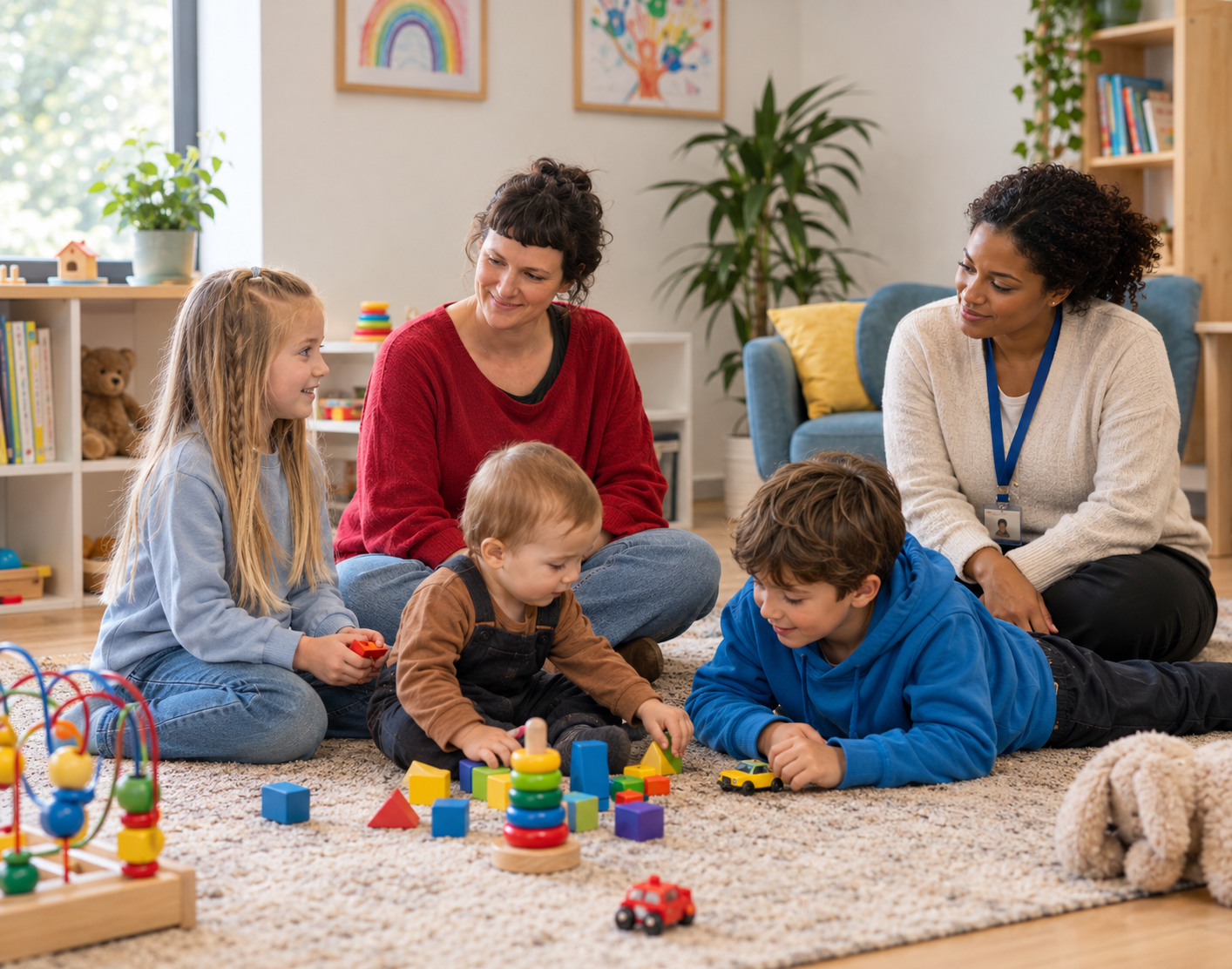
Small actions often make the biggest difference. Therefore, a skilled supervisor greets each child by name and asks about their day before the session begins. Additionally, supervisors learn each child’s individual needs, since every child settles differently. Some children want to jump straight into play, while others need a few quiet minutes first. Consequently, supervisors watch closely for signs that a child needs reassurance, such as hesitation or quietness. Furthermore, they never rush a relationship; instead, they let bonds develop at the child’s own pace. This patient approach helps children feel secure rather than pressured, and it reflects why the role of a supervised contact supervisor matters so much to families.
Supporting a child between two different worlds
Children in supervised contact often move between two different worlds. For instance, one household may follow a strict bedtime routine, while another feels more relaxed. Similarly, emotional expectations can differ from home to home. Because of this, a contact supervisor offers a steady, neutral presence that doesn’t ask the child to choose sides. Instead, supervisors focus on the present moment and help the child settle into contact without added pressure. In this way, the role of a supervised contact supervisor becomes a bridge that connects two worlds while keeping the child’s wellbeing central throughout. Indeed, the role of a supervised contact supervisor rests on patience, consistency and genuine care for the child in front of them.
The things contact supervisors notice that parents may not
Because supervisors watch closely, they often notice details that others might miss. For example, they observe how a child communicates, how they respond to activities, and when they seek comfort. They also notice how a child moves between tasks or shifts from one emotion to another. However, supervisors don’t judge parents or interpret every behaviour they see. Rather, they record and report observations following our procedures, and they always keep the focus on safe and appropriate contact. This careful, neutral approach protects both the child and the integrity of the session.
Why the child’s experience is at the heart of supervised contact
Ultimately, the child’s experience remains the heart of everything we do. Good supervised contact gives children real opportunities to build meaningful relationships with family members. At the same time, appropriate safeguards stay firmly in place throughout each session. Because of this balance, children can enjoy family time while feeling protected and supported. Understanding what does a contact supervisor do helps families and professionals appreciate the thought and care behind every session we run. Ultimately, the contact supervisor role exists to give children the best possible experience of family contact.
Get in touch with Prime Time Charity Services
If you would like to learn more about our supervised child contact services, or you need to make a referral, our team at Prime Time Charity Services is ready to help. Please call us on 0300 365 2700 or email at referral@ptccc.org.uk, and we will guide you through the next steps.
Frequently Asked Questions.
A contact supervisor creates a safe, calm environment and supports positive family time while observing the child’s wellbeing throughout the visit.
The role of a supervised contact supervisor helps children feel secure by offering a steady, neutral presence as they move between two different family environments.
No, supervisors don’t judge parents. Instead, they observe interactions carefully and follow procedures to support safe and appropriate contact.
The contact supervisor role involves welcoming children, supporting family relationships and following clear procedures to keep every contact session safe and appropriate.
You can refer a family by calling 0300 365 2700 or emailing referral@ptccc.org.uk, and our team will guide you through the process.
Related Posts

Contact Us
Prime Time Child Contact Centres
Norwood Picture House Library,
1-7 Norwood High St, Norwood,
London SE27 9JU,
Friends Meeting House,
Redlands Way,
London, SW2 3LU
0300 365 2700
referral@ptccc.org.uk


“Keeping children in touch with parents following separation”
